
Tax Dodgers Database
Naming and shaming corporate tax dodgers


Estimated Dodge: £?? billion
Barclays is a multinational banking and financial services company, headquartered in the heart of the city of London. As the fourth largest bank in the world, Barclays carries a lot of clout in the byzantine domain of finance. In the period running up to the financial crash of '08 and up until last year Barclays not only participated in an astounding array of tax avoidance schemes but also earned vast profits by offering these schemes to smaller businesses looking to limit their tax liabilities.
Barclays

What the customers think
How they dodge
To understand the countless number of tax avoidance schemes set up and sold on by Barclays' now-defunct Structured Capital Markets (SCM) division you would need either a.) 100 years of study or b.) a brain to rival that of Einstein's. The notoriously prolific schemes emanating from SCM denied the tax man of immeasurable amounts of money whilst raking in huge profits for Barclays. The Guardian estimated that Barclays earned profits upwards of £1 billion a year as a direct result of the 'dark arts' practiced in its SCM division.
Structured Capital Markets was run by Roger Jenkins, who earned affectionate nicknames such as 'Roger the Dodger' and 'King of the Double Dip' during his time there. The 'Double Dip' moniker refers to a tax avoidance scheme that exploited differing tax rates in various countries to undeservedly earn his bank double tax benefits on profits it made.
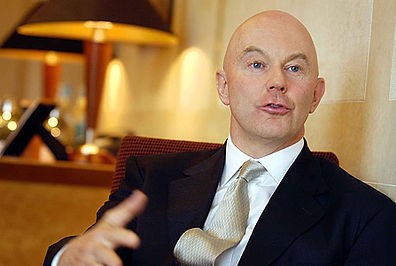
Roger Jenkins is known as a ruthless operator. He allegedly sacked an SCM worker for booking an executive taxi that was a Volvo rather than an S class Mercedes.
Roger was not considered to be the key talent in the Barclays avoidance arm however. A shadowy Scot, Iain Abrahams, was thought to be the "brains behind the schemes" utilising the encyclopaedic knowledge of tax and accounting law that he picked up during his time working for Slaughter and May, a private accountancy firm.
Barclays' dark arts began to unravel in 2009, after whistleblowers revealed seven fiendishly complicated schemes set up by SCM to avoid tax. These schemes were all also being sold as financial services to any businesses who used Barclays' banking expertise to further their own affairs.
Structured Capital Markets was finally axed in early 2013, after its unsavoury practices caused an outcry in the national press. Despite this, it is expected to carry on swindling tax out of HMRC for another 10 years, as various legacy schemes run their course.